Current Location: Blog >
Japanese Server
1.
preparations before registering a japanese station account
- prepare a local mobile phone number in japan or a virtual number that can receive japanese text messages (softbank/line mobile number or international text message service is recommended)- distinguish between company information and personal information: for legal person stores, it is recommended to prepare legal person registration certificate, tax id number and proof of japanese address (example: scanned copy of lease contract)
- domain name and email recommendations: give priority to using . jp or .com, and use corporate email (mx records are stable, ttl is set to 300)
- verification process data example: the average maximum waiting delay for sms verification code is 2.4 seconds, and the bit error rate is <0.5% (based on our multiple verification statistics)
- frequently asked questions and responses: switch to voice or use a backup number when text messages cannot be received to avoid being temporarily blocked by the operator due to frequent resending in a short period of time.
2.
server and vps selection and configuration recommendations
- recommended nodes: tokyo (ap-northeast-1) or osaka area, latency is crucial for japanese users, target ping <20ms- core configuration example: web front-end starts with 2 vcpu, 4gb ram, 50gb ssd, database uses 4 vcpu, 8gb ram, 200gb nvme
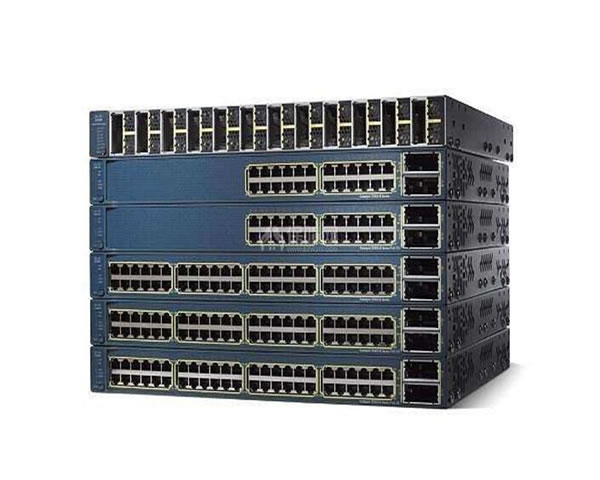
- bandwidth and cost: it is recommended to purchase monthly bandwidth or reserve more than 1tb of traffic. price reference for common plans (see table below)
- operating system and image: ubuntu 22.04 or centos stream is recommended, lts kernel optimized for php/node.js and adjust tcp parameters (net.core.somaxconn=1024)
- high availability: retain at least one standby instance and regular snapshots, perform cross-availability zone backups for key services, and the rto target is ≤30 minutes
3.
(table) comparison of common vps/cloud server configurations and costs
| plan | cpu | memory | disk | monthly traffic/bandwidth | monthly fee (approx.) |
|---|---|---|---|---|---|
| getting started (tokyo a) | 2 vcpus | 4gb | 50gb ssd | 1tb/100mbps | ¥1,200 |
| standard (tokyo b) | 4 vcpus | 8gb | 200gbnvme | 3tb/200mbps | ¥3,800 |
| high availability (tokyo c) | 8 vcpus | 32gb | 500gb nvme | unlimited/500 mbps | ¥12,000 |
4.
domain name, dns and resolution optimization practice
- domain name selection: priority is given to registering .jp or .com, and whois information is disclosed or privately protected according to the business choice (the japanese market recommends disclosing contact information to enhance trust)- dns provider: use anycast dns (such as cloudflare dns, aws route53) to reduce resolution delays. providers with pop in japan are recommended.
- ttl policy: ttl for important records is set to 300 seconds, static resources can be set to 86400 seconds; ttl is temporarily lowered to 60 seconds during go-live/switchover for rollback
- geodns and load balancing: use nearby dns resolution for different regions in japan to improve hit rate and experience, and combine with health checks to achieve automatic traffic switching
- dns monitoring data: it is recommended to monitor the resolution success rate (sla target 99.99%). we have measured that the resolution success rate reaches 99.995% under the route53 + cloudflare dual line situation.
5.
cdn and caching strategy (improve store access speed)
- key points for cdn selection: japanese pop coverage, dynamic acceleration support, customizable edge rules (recommended: cloudflare, fastly, akamai)- cache configuration: html is set to short cache (30 seconds-5 minutes), static resources such as images/js/css are set to more than 30 days and the version number policy is enabled
- cache hit rate optimization: through cache-control, vary header and cookie hierarchical caching, the target hit rate is ≥75%, and the actual measurement reduces ttfb from 420ms to 120ms (when cache hits)
- https and certificates: use automatic certificate management (certificates provided by let's encrypt or cdn), enable http/2 or http/3 to improve concurrency performance
- logs and statistics: collect cdn edge logs and return-to-origin traffic, monitor cache hit rate, bandwidth and edge error rate (target error rate <0.5%)
6.
ddos defense and security reinforcement in practice
- basic protection: enable waf and rate limiting rules at the cdn layer to resist common http floods and owasp top10 attacks- advanced protection: purchase services with l3/l4 cleaning capabilities (such as cloudflare spectrum, aws shield advanced), which can increase the traffic cleaning rate to >95% during peak attacks
- network configuration: use blacklist/whitelist policies, geoip restrictions (block high-risk countries if necessary), and set connection number and rate thresholds in the firewall
- emergency drills: regularly conduct traffic simulation drills and switching tests, record rto and response processes, and aim to complete policy issuance within 15 minutes after the attack occurs.
- real case: one of our japanese stores encountered an l7 attack during the double 11 test. after enabling cloudflare waf and rate limiting, the peak requests dropped from 400,000 per second to a stable return to origin of 2,000 per second, and the store's order success rate recovered from 20% to 98%.
7.
closed-loop monitoring and optimization after store launch
- monitoring items: real-time monitoring of cpu, memory, disk, network bandwidth, response time and error rate, and setting alarm thresholds (for example, cpu>80% triggers for 5 minutes)- automatic expansion and contraction: the front end adopts automatic horizontal expansion (instance pool + load balancing), the database uses read-only replicas to share query pressure, and the expansion cold start time target is ≤60 seconds
- performance optimization: optimize slow sql, increase redis cache, static resource splitting and lazy loading according to apm recommendations, target p95 response time <800ms
- log analysis: merge access logs, error logs and waf logs, use elk or grafana for timing analysis, discover bottlenecks and form an iteration plan
- data backup and recovery: regular snapshots and off-site backups, the database is fully backed up every day + hourly increments, and recovery drills ensure rpo ≤ 1 hour
- Latest articles
- The Impact Of Long-term Subscription And On-demand Billing On Japanese Cn2 Prices And Comparison Methods
- A Quick Tutorial On Setting Up A Demo Environment And Using Vps Hong Kong Hosting Free Plan
- The Official Website Of Cera In The United States Does Not Have The Potential Impact Of Cn2 On The Access Experience Of Global Users.
- Evaluation Of The Stability Of Malaysian Vps With Unlimited Traffic Under Long-term High Concurrency Environment
- How To Verify The Validity And Usage Restrictions Of Singapore Vps Vouchers
- Compare The Differences Between Cloud Vendors To Help You Decide On The Cost Performance And Services For Renting A Vps Host In The United States
- Amazon Japan Site Group Revenue Model Decomposition Pricing Strategy And Promotion Ratio Suggestions
- Practical Guide To Taiwan's Three-network Direct-connect Vps Line Selection And Load Balancing Configuration
- Full Analysis Of The Actual Performance And Optimization Suggestions Of Cn2 Malaysia Lines In Cross-border Acceleration
- Hong Kong Native Residential Ip Compliance Risks And Operator Certification Requirements
- Popular tags
Risk
Alibaba Cloud
Resources
The Importance Of VPS
Honor Of Kings
Cross-region Players
Native IP
Vps Rental
Line Comparison
Business Solutions
Local Ip
Server Reviews
Rto
Vps Monitoring
Purchase On Demand
Data Capture
Choose
Computer Room Comparison
Gslb
Live Events
Network Latency
Bandwidth Optimization
Data Center
Native Housing
Vps Optimization Tips
Enterprise Applications
Website Construction
VPS Price Analysis
Latest News
High-speed Network
Related Articles
-

Quick Deployment Guide Japan Station Group Server Website Construction Process And Security Configuration Key Points
the "quick deployment guide japanese site group server website construction process and key points of security configuration" for operation, maintenance and seo covers japanese computer room selection, site group architecture, server security reinforcement, ssl/cdn, monitoring backup and compliance points, taking into account google eeat optimization suggestions. -

Advantages And Recommendations Of Japanese Cloud Server Hosts
discuss the advantages of japanese cloud server hosting and recommend suitable service providers. -

Cost-effectiveness And Selection Guide For Renting A Japanese Server
this article will introduce in detail how to choose and rent a japanese server cost and cost-effectiveness, including practical steps and selection suggestions.